

Hydraulic Valve Bodies Explained: How They Work, Materials, Manufacturing, and Common Failures
- Jul 31
- 9 min read
Updated: Aug 4

Hydraulic valve bodies are precision-machined components that direct the flow of hydraulic fluid throughout a hydraulic system. They contain internal passages, ports, and valves that control pressure, flow direction, and fluid distribution to ensure hydraulic equipment operates efficiently and reliably.
Key Takeaways
Hydraulic valve bodies control the direction, pressure, and flow of hydraulic fluid.
They are used in construction equipment, agricultural machinery, industrial equipment, mining machines, and other hydraulic systems.
Manufacturing typically involves casting or forging, precision CNC machining, finishing, and rigorous quality inspections.
Material selection depends on operating pressure, corrosion exposure, wear resistance, and application requirements.
Poor machining, contamination, corrosion, and excessive pressure are common causes of valve body failure.
Precision manufacturing is essential because even minor dimensional variations can affect hydraulic performance.
Hydraulic systems rely on many components working together to transfer power efficiently. Among these components, the hydraulic valve body serves as the central pathway that directs hydraulic fluid to the correct location at the correct pressure.
Although it often receives less attention than pumps or cylinders, the valve body plays a critical role in overall system performance. Poorly manufactured or damaged valve bodies can lead to internal leakage, pressure loss, inefficient operation, and costly equipment downtime.
For engineers, equipment manufacturers, and procurement professionals, understanding how hydraulic valve bodies operate and are manufactured can help improve reliability and support better purchasing decisions.
What Is a Hydraulic Valve Body?
A hydraulic valve body is the main housing that contains the internal passages and mounting locations for hydraulic valves, spools, cartridges, plugs, and other control components.
Rather than generating hydraulic power, the valve body manages how hydraulic fluid moves throughout the system.
Depending on the equipment, a valve body may control:
Fluid direction
System pressure
Flow rate
Multiple hydraulic circuits
Cylinder movement
Motor operation
Valve bodies are manufactured with carefully machined internal passages that allow hydraulic fluid to flow between ports while maintaining precise pressure control.
Because these passages must meet extremely tight tolerances, manufacturing accuracy directly affects hydraulic system performance.
Why Hydraulic Valve Bodies Matter
A hydraulic system is only as reliable as the components that control fluid movement.
Valve bodies help ensure hydraulic fluid reaches the correct actuator at the proper pressure and flow rate.
A properly manufactured valve body helps:
Improve system efficiency
Reduce internal leakage
Maintain consistent pressure
Improve equipment responsiveness
Extend component life
Reduce maintenance requirements
Poor-quality valve bodies can create pressure losses that reduce equipment performance and increase operating costs.
How Hydraulic Valve Bodies Work
Hydraulic valve bodies function by routing pressurized hydraulic fluid through a network of internal passages.
As hydraulic valves or cartridge valves open and close, fluid is directed to specific cylinders, motors, or other hydraulic actuators.
For example, when an equipment operator moves a control lever:
Hydraulic pressure enters the valve body.
Internal valves shift position.
Fluid is directed through machined passages.
Hydraulic cylinders or motors receive pressurized fluid.
Return fluid flows back through separate passages to the reservoir.
This entire process occurs within fractions of a second.
The precision of the valve body's internal passages helps ensure smooth, predictable hydraulic performance under varying operating conditions.
Main Components of a Hydraulic Valve Body
Although designs vary depending on the application, most hydraulic valve bodies include several common features.
Component | Purpose |
Internal flow passages | Direct hydraulic fluid between ports |
Ports | Connect hoses, fittings, or hydraulic lines |
Valve cavities | House cartridge valves or directional valves |
Mounting surfaces | Secure the valve body to the equipment |
Sealing surfaces | Prevent internal and external leakage |
Threaded connections | Accept fittings, plugs, or sensors |
Each feature must be machined accurately to maintain proper hydraulic performance.
Even small dimensional errors can affect pressure regulation or increase internal leakage.
Common Applications
Hydraulic valve bodies are used across many industries that rely on hydraulic power.
Common applications include:
Construction equipment
Agricultural machinery
Mining equipment
Forestry equipment
Material handling equipment
Industrial manufacturing systems
Marine hydraulic equipment
Oil and gas equipment
Utility vehicles
Mobile hydraulic machinery
Because operating environments vary significantly, valve body design and material selection must match the application's pressure, temperature, and environmental conditions.
How Hydraulic Valve Bodies Are Manufactured
Hydraulic valve bodies must be manufactured with exceptional precision to ensure proper fluid flow, pressure control, and sealing performance. Unlike many industrial components, even minor dimensional variations inside a valve body can affect system efficiency or lead to internal leakage.
The manufacturing process typically combines several production methods, including casting or forging, CNC machining, finishing, inspection, and testing.
1. Casting or Forging
Production begins by selecting the most appropriate manufacturing method based on the valve body's design, operating conditions, and performance requirements.
Custom Casting
Casting is commonly used when a valve body has:
Complex internal passages
Intricate external geometry
Large production volumes
Cost-sensitive designs
Casting allows manufacturers to produce near-net-shape components, reducing machining time while maintaining design flexibility.
Common casting processes include:
Sand casting
Investment casting
Permanent mold casting
Each process offers different advantages depending on the size, complexity, and required surface finish of the valve body.
Custom Forging
Forging may be selected when higher mechanical strength or improved fatigue resistance is required.
During forging, metal is shaped under compressive force, creating a refined grain structure that improves:
Strength
Toughness
Impact resistance
Fatigue performance
Forged valve bodies are often used in demanding hydraulic systems that operate under extremely high pressures or heavy cyclic loading.
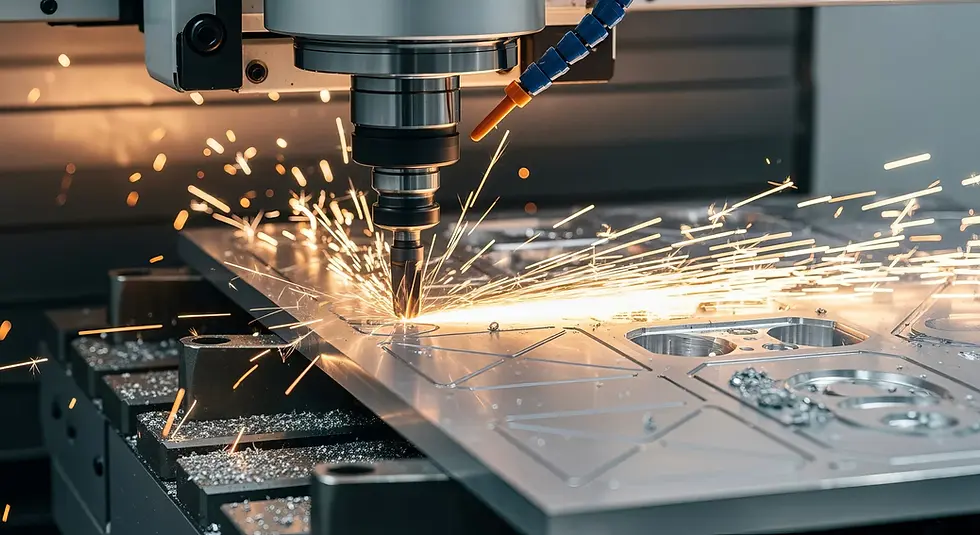
2. CNC Machining
Once the casting or forging is complete, the valve body undergoes precision CNC machining.
This is one of the most critical stages of manufacturing because hydraulic performance depends on extremely accurate internal features.
Typical machining operations include:
Drilling fluid passages
Milling mounting surfaces
Boring valve cavities
Threading ports
Precision reaming
Surface finishing
Modern CNC equipment enables manufacturers to produce valve bodies with tight dimensional tolerances and consistent repeatability.
3. Heat Treatment
Some hydraulic valve bodies undergo heat treatment to improve their mechanical properties.
Depending on the material, heat treatment may increase:
Strength
Hardness
Wear resistance
Fatigue resistance
The specific process depends on the alloy and the intended application.
4. Surface Finishing
Surface finishing helps prepare valve bodies for long-term service.
Common finishing operations include:
Shot blasting
Deburring
Grinding
Polishing
Protective coating
Corrosion-resistant treatments
A properly finished component helps reduce contamination, improve sealing performance, and increase corrosion resistance.
Common Materials Used for Hydraulic Valve Bodies
Material selection plays a major role in valve body performance.
The ideal material depends on operating pressure, corrosion exposure, temperature, wear conditions, and manufacturing requirements.
The table below summarizes common materials used for hydraulic valve bodies.
Material | Typical Applications | Key Advantages |
Cast Iron | General industrial equipment | Good machinability, vibration damping, cost-effective |
Ductile Iron | Heavy-duty hydraulic systems | Higher strength and impact resistance than cast iron |
Carbon Steel | High-pressure hydraulic equipment | Excellent strength and durability |
Stainless Steel | Marine, chemical processing, corrosive environments | Superior corrosion resistance |
Aluminum | Mobile equipment, lightweight systems | Lightweight and easy to machine |
Bronze | Marine and specialty applications | Good corrosion resistance and wear properties |
Each material offers different performance characteristics, and the selection should be based on the application's actual operating conditions rather than cost alone.
Choosing the Right Manufacturing Process
The manufacturing process should match the valve body's design requirements.
Manufacturing Process | Best For | Advantages |
Casting | Complex geometries | Design flexibility, cost-effective production |
Forging | High-pressure applications | Greater strength and fatigue resistance |
CNC Machining | Precision features | Tight tolerances and consistent quality |
Many hydraulic valve bodies combine these processes. For example, a cast or forged blank may undergo extensive CNC machining before final inspection and assembly.
Quality Control During Manufacturing
Hydraulic valve bodies must meet strict quality standards before entering service.
Manufacturers typically perform multiple inspections throughout production to verify dimensional accuracy, material integrity, and overall quality.
Common quality assurance procedures include:
Material certification
Dimensional inspection
Coordinate Measuring Machine (CMM) verification
Pressure testing
Surface roughness measurement
Non-destructive testing (NDT)
Visual inspection
Final functional inspection
These inspections help identify manufacturing defects before the component reaches the customer.
Consistent quality control also improves production repeatability, ensuring each valve body performs as intended under demanding operating conditions.
Common Causes of Hydraulic Valve Body Failure
Although hydraulic valve bodies are designed for demanding operating conditions, they can fail prematurely if they are exposed to poor maintenance, improper operating conditions, or manufacturing defects.
Understanding the most common failure causes helps engineers, maintenance teams, and procurement professionals reduce downtime and improve system reliability.
Fluid Contamination
Contaminated hydraulic fluid is one of the leading causes of valve body failure.
Dirt, metal particles, water, and degraded hydraulic oil can circulate through the system and damage precision-machined internal passages.
Common effects include:
Scored valve bores
Sticking valves
Increased internal leakage
Accelerated wear
Reduced hydraulic efficiency
Maintaining clean hydraulic fluid through proper filtration and routine maintenance is one of the most effective ways to extend valve body life.
Excessive Operating Pressure
Hydraulic valve bodies are designed to withstand specific pressure ranges.
Operating beyond those limits can cause:
Cracked housings
Distorted valve cavities
Internal leakage
Fatigue cracking
Seal failure
Pressure relief valves and routine system monitoring help prevent excessive stress on hydraulic components.
Corrosion
Valve bodies operating in marine, chemical processing, or outdoor environments may be exposed to moisture, salt, or corrosive chemicals.
Without proper material selection or protective finishes, corrosion can:
Damage sealing surfaces
Restrict internal passages
Reduce structural integrity
Increase leakage
Selecting corrosion-resistant materials helps improve long-term reliability.
Improper Machining
Hydraulic valve bodies depend on extremely tight machining tolerances.
Poor machining can result in:
Rough sealing surfaces
Misaligned passages
Oversized or undersized valve bores
Pressure loss
Poor valve movement
Precision CNC machining is essential for achieving consistent hydraulic performance.
Normal Wear and Fatigue
Hydraulic systems experience thousands—or even millions—of operating cycles throughout their service life.
Repeated pressure cycles gradually wear internal surfaces and may eventually lead to fatigue cracks or reduced sealing performance.
Routine inspections help identify wear before it results in equipment failure.
How to Choose the Right Hydraulic Valve Body
Selecting the right hydraulic valve body requires evaluating more than just size or price.
Several factors influence long-term performance.
Selection Factor | Why It Matters |
Operating pressure | Determines required strength and material |
Flow requirements | Ensures efficient hydraulic performance |
Material | Affects durability, corrosion resistance, and wear |
Operating environment | Influences material and coating selection |
Machining accuracy | Impacts sealing performance and leakage |
Manufacturing quality | Improves consistency and long-term reliability |
Maintenance requirements | Affects lifecycle costs |
Choosing a valve body that matches the application's operating conditions helps improve equipment reliability while reducing maintenance expenses.
Why Manufacturing Quality Matters
Hydraulic valve bodies are among the most precision-dependent components in a hydraulic system.
Their performance depends on:
Accurate internal passages
Smooth sealing surfaces
Tight dimensional tolerances
Consistent material quality
Reliable machining processes
Small manufacturing variations that might be acceptable for other industrial components can significantly affect hydraulic performance.
Manufacturers that combine custom casting, custom forging, precision CNC machining, finishing, and comprehensive inspections help produce valve bodies capable of performing reliably under demanding industrial conditions.
Common Mistakes When Selecting Hydraulic Valve Bodies
Many valve body issues begin before production even starts.
Choosing Based on Price Alone
A lower-cost component may reduce upfront expenses but increase long-term costs through more frequent repairs and equipment downtime.
Evaluating total lifecycle cost often provides better value than considering purchase price alone.
Ignoring Operating Conditions
Every hydraulic application is different.
Factors such as:
Pressure
Temperature
Corrosion exposure
Duty cycle
Environmental conditions
should all influence valve body design and material selection.
Overlooking Manufacturing Capabilities
A manufacturer with limited production capabilities may rely on multiple suppliers, increasing production complexity and the potential for quality variation.
Working with a manufacturer that offers casting, forging, machining, finishing, and inspection under one production workflow can improve consistency and simplify project management.
Failing to Consider Future Maintenance
Valve bodies should not only perform well when new but also support long-term maintenance.
Considering replacement intervals, repairability, and service requirements during the design stage can help reduce lifecycle costs.
Choosing the Right Manufacturing Partner
Reliable hydraulic valve bodies begin with reliable manufacturing.
An experienced manufacturing partner can assist with:
Material selection
Design for manufacturability
Custom casting
Custom forging
Precision CNC machining
Surface finishing
Quality inspections
Prototype development
Production scaling
Working with a manufacturer that understands hydraulic applications helps improve component consistency while reducing production risks.
Conclusion
Hydraulic valve bodies play a critical role in directing hydraulic fluid, maintaining system pressure, and supporting efficient equipment operation. Because they contain precision-machined internal passages, their performance depends on accurate manufacturing, proper material selection, and consistent quality control.
Understanding how valve bodies work, how they are manufactured, and what causes them to fail allows engineers, equipment manufacturers, and procurement professionals to make informed decisions that improve reliability and reduce long-term operating costs.
Whether manufactured through custom casting or custom forging and finished with precision CNC machining, a well-designed hydraulic valve body contributes to smoother operation, reduced maintenance, and longer equipment life.
Your Manufacturing Partner for Hydraulic Valve Bodies
BMF Industrial supports manufacturers with custom casting, custom forging, machining, finishing, and material selection for hydraulic valve bodies and other industrial components. From prototype development to full-scale production, BMF Industrial works with customers to manufacture precision components designed for demanding hydraulic applications.
If you're looking for a manufacturing partner for custom hydraulic valve bodies, contact BMF Industrial to discuss your project requirements.
Frequently Asked Questions About Hydraulic Valve Bodies
What is a hydraulic valve body?
A hydraulic valve body is the main housing that directs hydraulic fluid through internal passages. It contains ports and valve cavities that control fluid flow, pressure, and direction throughout a hydraulic system.
What materials are commonly used for hydraulic valve bodies?
Common materials include cast iron, ductile iron, carbon steel, stainless steel, aluminum, and bronze. The best material depends on operating pressure, corrosion exposure, temperature, and application requirements.
How are hydraulic valve bodies manufactured?
Hydraulic valve bodies are typically produced through custom casting or forging, followed by precision CNC machining, heat treatment when required, surface finishing, and comprehensive quality inspections.
Why is CNC machining important for hydraulic valve bodies?
Precision CNC machining ensures internal passages, valve bores, and sealing surfaces meet tight dimensional tolerances. Accurate machining helps reduce leakage, maintain pressure, and improve hydraulic system performance.
How do manufacturers inspect hydraulic valve bodies?
Manufacturers commonly use dimensional inspections, Coordinate Measuring Machine (CMM) verification, pressure testing, non-destructive testing (NDT), surface finish inspections, and visual quality checks to verify performance and consistency.
How do I choose the right hydraulic valve body?
Consider operating pressure, flow requirements, material selection, environmental conditions, machining accuracy, manufacturing quality, and long-term maintenance requirements. Matching the valve body to the application's operating conditions helps improve reliability and service life.


Comments