

How Are Hydraulic Cylinders Made? Inside the Hydraulic Cylinder Manufacturing Process

Hydraulic cylinders are found in some of the hardest-working equipment in the world. Excavators, forklifts, agricultural machinery, industrial presses, construction equipment, and material handling systems all rely on hydraulic cylinders to create controlled linear force.
But how are hydraulic cylinders made?
The hydraulic cylinder manufacturing process involves much more than simply putting a piston inside a steel tube. Each cylinder must be designed for a specific application, manufactured to precise tolerances, assembled with the correct components, and inspected before it can reliably operate under pressure.
In this guide, we'll walk through the hydraulic cylinder manufacturing process from initial design and material selection to machining, assembly, and final inspection.
What Is a Hydraulic Cylinder?
A hydraulic cylinder is a mechanical actuator that converts hydraulic pressure into linear movement and force.
Pressurized hydraulic fluid enters the cylinder and pushes against a piston. That pressure causes the piston and attached rod to move in a straight line.
Depending on the system, the movement can be used to lift, push, pull, tilt, clamp, or position equipment.
Although hydraulic cylinders come in many sizes and configurations, most contain several basic components:
Cylinder barrel
Piston
Piston rod
Cylinder head
Cylinder cap
Gland
Seals
Bearings or wear rings
Mounting components
Each component must work together correctly for the cylinder to operate safely and efficiently.
How Are Hydraulic Cylinders Made?
The exact process depends on the cylinder's application, size, pressure requirements, materials, and design.
However, most hydraulic cylinder manufacturing follows several major stages:
Engineering and design
Material selection
Cylinder barrel manufacturing
Piston rod manufacturing
Machining internal components
Welding and fabrication
Surface finishing
Seal installation and assembly
Inspection and testing
Let's look at each step more closely.
1. Hydraulic Cylinder Design and Engineering
Before manufacturing begins, engineers must determine how the hydraulic cylinder will be used.
Several factors influence the design, including:
Required force
Operating pressure
Stroke length
Bore diameter
Rod diameter
Mounting style
Operating temperature
Working environment
Expected duty cycle
Available installation space
The cylinder must produce enough force for the application while also being able to withstand the pressure generated by the hydraulic system.
Engineers also need to consider how frequently the cylinder will operate and what type of loads it will experience.
For custom hydraulic cylinders, this stage may involve reviewing customer drawings, equipment requirements, existing components, or performance specifications.
2. Selecting Materials
Material selection is an important part of hydraulic cylinder manufacturing because cylinders often operate under heavy loads and high pressure.
Steel is commonly used for major structural components because of its strength, durability, and machinability.
Typical materials may include:
Carbon steel
Alloy steel
Stainless steel
Chrome-plated steel
Cast iron
Specialized alloys
The best material depends on the operating environment and the component's function.
For example, cylinders used outdoors or in corrosive environments may require additional corrosion resistance.
The piston rod may also require a hardened or coated surface to resist wear during repeated operation.
3. Manufacturing the Cylinder Barrel
The cylinder barrel forms the main body of the hydraulic cylinder.
Inside the barrel, the piston moves back and forth as hydraulic pressure changes.
Because the piston and seals interact closely with the barrel's internal surface, dimensional accuracy is critical.
During manufacturing, the barrel may undergo processes such as:
Cutting
Boring
Honing
Skiving
Roller burnishing
Precision machining
The goal is to create a smooth internal surface with consistent dimensions.
An uneven or rough surface can increase friction, damage seals, contribute to leakage, and reduce cylinder performance.
4. Manufacturing the Piston Rod
The piston rod transfers movement from the piston to the machinery or equipment.
It extends outside the cylinder, which means it must withstand mechanical loads while also passing repeatedly through seals in the cylinder head.
Piston rods are generally manufactured from strong steel and may undergo several operations.
These can include:
Cutting
Straightening
Turning
Grinding
Thread machining
Heat treatment
Surface hardening
Chrome plating or other surface treatments
The rod must be straight and have a smooth surface.
Damage or irregularities on the rod can wear seals prematurely and allow hydraulic fluid to escape.
5. Machining the Piston and Other Components
Many smaller components also require precision machining.
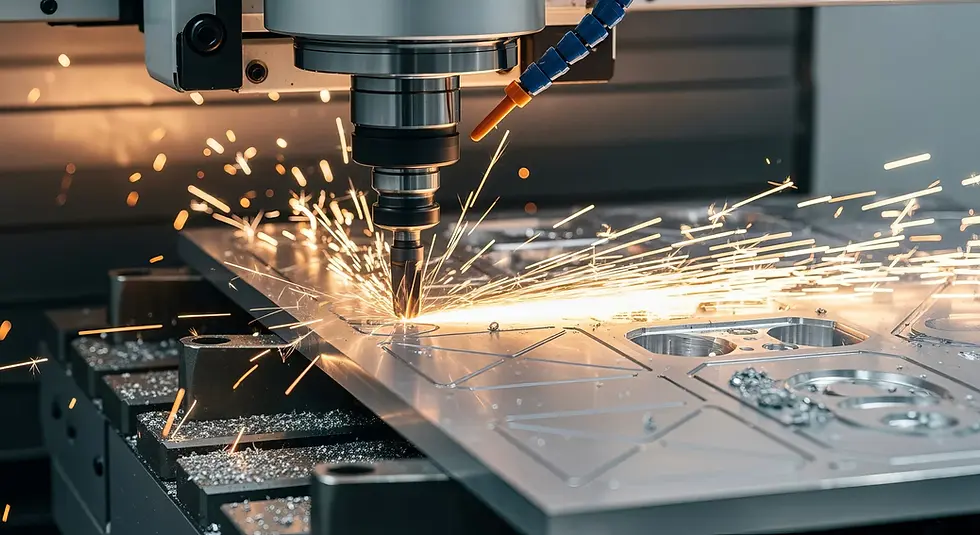
The piston, gland, cylinder head, end cap, and mounting components may all be produced using CNC machining or other manufacturing methods.
For example, the piston must fit properly inside the cylinder barrel while allowing seals and wear rings to function correctly.
Machining may be used to create:
Seal grooves
Threads
Bores
Hydraulic ports
Mounting holes
Mating surfaces
Precision diameters
Tolerances are especially important because small dimensional differences can affect sealing, alignment, and cylinder performance.
6. Welding and Fabrication
Many hydraulic cylinders include welded components.
The cylinder barrel may be welded to an end cap, while mounting brackets, ports, or other features may also require welding.
Common mounting styles can include:
Clevis mounts
Trunnion mounts
Flange mounts
Pin mounts
Cross-tube mounts
Welding must be carefully controlled because the cylinder may operate under significant internal pressure.
Poor weld quality can create weak points or cause distortion that affects alignment.
After welding, components may require additional machining or inspection.
7. Surface Finishing and Protective Treatments
Several hydraulic cylinder components require specific surface finishes.
The piston rod is one of the most important examples.
Because the rod repeatedly moves through the cylinder's seals, its surface must be smooth enough to reduce friction while still maintaining proper sealing.
Surface treatments can also help improve resistance to:
Corrosion
Scratching
Wear
Moisture
Chemicals
Harsh operating environments
The outside of the cylinder may also receive paint, coatings, or other protective finishes depending on the application.
8. Installing Hydraulic Cylinder Seals
Seals play a critical role in hydraulic cylinder performance.
They help contain hydraulic fluid, maintain pressure, prevent contamination, and control fluid movement inside the cylinder.
A cylinder may contain several different types of seals, including:
Piston seals
Rod seals
Wiper seals
O-rings
Buffer seals
Static seals
Each seal has a specific function. For example, rod seals help prevent hydraulic fluid from leaking where the piston rod exits the cylinder.
Wiper seals help prevent dust, dirt, and other contaminants from entering the cylinder when the rod retracts.
Seal materials must also be compatible with the hydraulic fluid, pressure, temperature, and working environment.
9. Hydraulic Cylinder Assembly
Once individual components have been manufactured and inspected, the cylinder can be assembled.
During assembly, technicians install components such as the:
Piston
Rod
Gland
Seals
Bearings
Cylinder head
End cap
Mounting hardware
Cleanliness is extremely important during this stage.
Even small amounts of dirt or metal debris inside a hydraulic cylinder can damage seals, scratch internal surfaces, or contaminate the hydraulic system.
Lubrication may also be applied to seals and components to help prevent damage during assembly.
10. Inspection and Testing
A hydraulic cylinder should be inspected before it is put into service.
Testing requirements vary depending on the cylinder and application.
Manufacturers may check:
Dimensions
Weld quality
Rod straightness
Surface finish
Seal installation
Stroke length
Leakage
Pressure performance
Hydraulic pressure testing may also be performed to verify that the assembled cylinder can safely operate under the required conditions.
The purpose of this stage is to identify manufacturing problems before the cylinder reaches the customer or is installed in equipment.
Why Precision Matters in Hydraulic Cylinder Manufacturing
Hydraulic cylinders often operate at high pressure, which means relatively small manufacturing problems can create significant performance issues.
For example, an incorrectly machined seal groove may allow leakage.
A damaged piston rod may wear out the rod seal.
Poor barrel alignment can increase friction and accelerate component wear.
This is why precision machining, proper material selection, controlled assembly, and thorough inspection are important throughout the manufacturing process.
A reliable hydraulic cylinder manufacturer must consider how every component interacts with the rest of the system.
Custom vs. Standard Hydraulic Cylinders
Not every application can use an off-the-shelf hydraulic cylinder.
Standard cylinders can work well when equipment requirements match commonly available dimensions and specifications.
Custom hydraulic cylinders may be necessary when an application requires specific:
Bore sizes
Stroke lengths
Rod diameters
Mounting configurations
Pressure ratings
Materials
Port locations
Operating environments
Custom manufacturing allows the cylinder to be designed around the equipment instead of requiring the equipment to be modified around the cylinder.
This can be particularly useful for specialized industrial machinery, heavy equipment, replacement components, and original equipment manufacturing.
Industries That Use Hydraulic Cylinders
Hydraulic cylinders are widely used because hydraulic systems can produce significant force in relatively compact spaces.
Common applications include:
Construction Equipment
Excavators, loaders, bulldozers, cranes, and other construction equipment rely heavily on hydraulic cylinders.
Agricultural Machinery
Hydraulic cylinders are used in tractors, harvesters, loaders, and other agricultural equipment.
Heavy Machinery
Industrial and heavy equipment often uses hydraulic cylinders for lifting, positioning, clamping, and movement.
Material Handling
Forklifts, lifts, dump equipment, and loading systems commonly depend on hydraulic cylinders.
Manufacturing Equipment
Hydraulic presses, production machinery, and automated equipment can use cylinders to generate controlled force.
Transportation and Infrastructure
Hydraulic systems are also found in rail, shipping, utility, and specialized transportation equipment.
What Should You Look for in a Hydraulic Cylinder Manufacturer?
Selecting the right manufacturing partner involves more than comparing prices.
Industrial buyers should also evaluate whether a manufacturer can consistently produce cylinders that meet their specifications.
Important considerations include:
Experience with custom hydraulic components
CNC machining capabilities
Material sourcing
Quality-control procedures
Ability to work from drawings and specifications
Welding and fabrication capabilities
Production consistency
Communication during manufacturing
Inspection and testing procedures
Ability to support repeat production
A strong manufacturing partner should understand not only how individual components are made but also how they affect the cylinder's overall performance.
BMF Industrial and Hydraulic Cylinder Manufacturing
At BMF Industrial, we support customers that require custom hydraulic components and industrial manufacturing solutions.
Our capabilities span multiple production processes, including machining, metal fabrication, casting, forging, sourcing, and quality control.
For hydraulic cylinder manufacturing, that broader manufacturing experience can be valuable because a cylinder contains numerous components that must be produced accurately and assembled to work together.
BMF Industrial works with customer drawings, specifications, and project requirements to help coordinate production and quality control from individual component manufacturing through finished assemblies.
We also support industrial customers that require related components for hydraulic systems, heavy machinery, construction equipment, utilities, and other demanding applications.
From Raw Materials to a Finished Hydraulic Cylinder
So, how are hydraulic cylinders made? The process starts long before final assembly.
Engineers first determine the cylinder's performance requirements. They select materials, machine barrels and rods, manufacture smaller components, finish surfaces, install seals, and carefully assemble the entire cylinder.
Inspection and testing then help verify that the finished cylinder meets the required specifications.
Every stage contributes to how reliably the cylinder performs once it is installed.
For companies that need custom hydraulic cylinders or related components, working with an experienced manufacturing partner can help simplify the process from design through production.
Looking for Hydraulic Cylinder Manufacturing Support?
BMF Industrial works with customers on custom hydraulic cylinders, hydraulic components, machined parts, and other industrial manufacturing projects.
If you have a drawing, existing component, or new hydraulic cylinder requirement, contact BMF Industrial to discuss your specifications and manufacturing needs.


Comments